
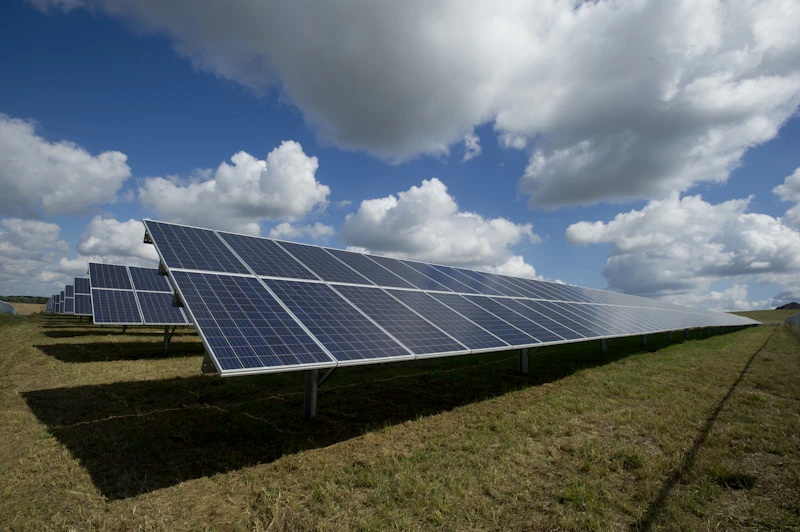
An off-grid solar system generates and uses electricity entirely independent of the WAPDA grid, making it the standard choice for irrigation, tube wells, and farm power in areas with limited or unreliable grid access. For Pakistani farmers, off-grid solar has become the fastest-growing segment of rural solar adoption, replacing diesel-powered tube wells that typically cost PKR 15,000–40,000 per month in fuel with a system that pays for itself within 2–3 years and then runs on free sunlight for two decades or more.
This guide covers how off-grid solar works for agricultural and rural use, what a solar tube well setup actually costs, and how to decide between a pure off-grid system and a hybrid setup with battery backup.
What every rural landowner should know before installing:
- No grid connection needed: Off-grid systems operate fully independent of WAPDA and don't require net metering approval
- Typical setup for irrigation: Direct solar pumping without batteries, since irrigation happens during daylight hours anyway
- 10 HP tube well cost: Roughly PKR 700,000–1,000,000 before subsidies, for a system suitable for 10–15 acres
- Government subsidy: Programs like the CM Punjab Solar Tube Well Program cover up to 50% of system cost for eligible farmers
- Payback period: Typically 2–3 years compared to diesel-powered pumping
What Is an Off-Grid Solar System?
An off-grid solar system generates power directly from solar panels and uses it immediately or stores it in batteries, without any connection to the national grid. This differs fundamentally from on-grid or hybrid systems, which stay connected to WAPDA and can draw from or export power to the grid. For rural and agricultural applications, off-grid makes sense because many farms sit far from reliable grid infrastructure, and the primary use case, daytime irrigation, aligns naturally with when solar panels produce the most power.
How Do Solar Tube Wells Work?
A solar tube well uses solar panels to power a submersible or surface pump directly, extracting groundwater for irrigation without any diesel fuel or grid electricity. The system runs during daylight hours when the sun is available, and because irrigation timing is flexible for most crops, the vast majority of agricultural setups skip battery storage entirely, pumping water only while the sun is out and relying on that water being sufficient for the day's irrigation needs.
Core components of a solar tube well system:
- Solar panel array, typically 1kW to 10kW+ depending on water demand and pump horsepower
- Solar pump inverter/controller, which converts panel output into the right power format for the pump
- Submersible or surface pump, sized in horsepower (HP) to match well depth and water volume needed
- Mounting structure and wiring, generally simpler than rooftop residential installations since ground-mounted arrays are common on farmland
How Much Does a Solar Tube Well Cost in Pakistan?
A standard 10 HP solar tube well system, suitable for irrigating 10–15 acres, costs approximately PKR 700,000 to 1,000,000 before any subsidy is applied. With government programs covering up to 50% of the cost, the effective price for an eligible farmer can drop to roughly PKR 350,000–500,000. Deeper wells requiring higher-capacity extraction need larger pumps, in the 15–30 HP range, and correspondingly bigger solar arrays, which raises the total system cost proportionally.
Approximate cost ranges by system size:
- 5 HP system: Suitable for smaller farms with shallower wells, lower upfront cost
- 10 HP system: PKR 700,000–1,000,000 before subsidy, standard for 10–15 acre farms
- 15–30 HP system: Higher cost, required for deep boreholes (400+ feet) or high-volume extraction needs
Solar panels in these systems typically carry a 25–30 year performance life, pump inverters last 10–15 years, and submersible pumps generally need replacement or servicing every 8–12 years, meaning the bulk of the investment holds its value across multiple decades of use.
What Government Subsidies Are Available for Farmers?
Provincial and federal programs offer meaningful cost reduction for farmers installing solar irrigation systems, and eligibility is usually tied to farm size, location, or registration status rather than income alone. The CM Punjab Solar Tube Well Program provides direct subsidies of up to 50% for eligible farmers in Punjab, while the State Bank of Pakistan's Renewable Energy Financing Scheme offers subsidized markup rates for qualifying agricultural and commercial-scale projects, separate from the direct subsidy programs. These programs change periodically, so confirming current eligibility criteria and available quota before committing to a system size is a necessary step, not an optional one.
Off-Grid vs. Hybrid: Which Setup Should a Farm Choose?
The right choice between pure off-grid and hybrid (grid or battery-backed) depends on whether your farm needs water access outside of daylight hours or only during standard irrigation timing.
How to decide:
- Choose pure off-grid (no batteries) if irrigation only needs to happen during the day and the farm has no other significant power needs outside daylight hours
- Choose hybrid with battery backup if the farm needs 24-hour water access, runs livestock operations requiring continuous power, or has a farmhouse or facility needing electricity after sunset
- Choose grid-tied hybrid if grid connection is available nearby and net metering could offset costs from other farm electricity use, such as processing equipment or storage facilities
Pure off-grid systems without batteries are simpler, cheaper, and have fewer components that require maintenance, which is why they remain the default recommendation for straightforward irrigation-only use cases.
What Other Rural and Farm Applications Use Off-Grid Solar?
Beyond tube wells, off-grid solar increasingly powers other rural and agricultural needs where grid access is limited or unreliable. Livestock watering systems, small-scale cold storage for produce, farmhouse lighting, and security systems on remote land all run effectively on properly sized off-grid setups. Farms with round-the-clock needs, such as poultry operations requiring continuous ventilation or temperature control, typically require a hybrid design with battery storage rather than a pure daytime-only system, since these loads can't pause when the sun goes down.
How Do You Size an Off-Grid System Correctly?
Correct sizing starts with your pump's horsepower requirement, which is determined by well depth and required water volume, then works backward to the solar array size needed to run that pump reliably during available sunlight hours. Undersizing the solar array relative to the pump's power draw is one of the most common mistakes in DIY or poorly advised installations, resulting in a pump that struggles to reach full output or shuts down intermittently on lower-sunlight days. Our solar system design team calculates the correct panel-to-pump ratio based on your specific well depth, target water volume, and farm location before any equipment is purchased.