
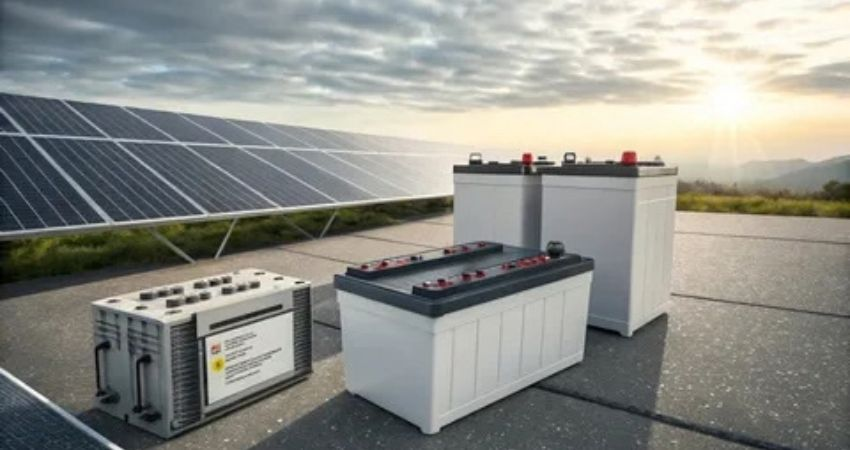
The lithium battery price in Pakistan has become an important topic for homeowners, businesses, and solar users looking for reliable backup power. Lithium batteries are increasingly being used with solar systems because they can store electricity during the day and provide backup when solar production is low or during load-shedding.
In 2026, prices vary widely depending on battery capacity, voltage, brand, battery management system (BMS), warranty, cycle life, and inverter compatibility. Current market guides put a typical 48V/51.2V 100Ah LiFePO4 battery in a broad range of roughly PKR 185,000 to PKR 450,000, while premium models can cost more.
This guide explains lithium battery prices, available sizes, benefits, and what Pakistani buyers should check before purchasing.
Quick Answer: Lithium Battery Price in Pakistan
The price depends mainly on the battery's voltage and capacity.
| Battery Size | Approx. Capacity | 2026 Price Range |
|---|---|---|
| 12V 100Ah LiFePO4 | 1.28 kWh | PKR 60,000–115,000 |
| 24V 100Ah LiFePO4 | 2.56 kWh | PKR 120,000–195,000 |
| 48V/51.2V 100Ah | 5.12 kWh | PKR 185,000–450,000 |
| 48V/51.2V 200Ah | Around 10.24 kWh | PKR 445,000–920,000 |
| 14–16 kWh system | 14–16 kWh | PKR 550,000–750,000+ |
These are indicative market ranges rather than fixed dealer prices. Prices can change based on brand, stock, exchange rates, warranty, and included installation equipment.
What Is a Lithium Battery?
A lithium battery is a rechargeable battery that uses lithium-based cells to store electrical energy. For solar systems in Pakistan, LiFePO4 (Lithium Iron Phosphate) is one of the commonly used lithium chemistries.
Unlike traditional lead-acid or tubular batteries, lithium batteries generally provide high usable capacity, faster charging, lower maintenance, and a longer cycle life.
A lithium battery can be connected to a compatible hybrid inverter and charged using electricity from solar panels or the grid. The stored electricity can then be used at night or during power outages.
Lithium Battery Price in Pakistan by Size
12V Lithium Battery Price
A 12.8V 100Ah LiFePO4 battery stores around 1.28 kWh of energy. Current market guides place many 12V 100Ah lithium batteries around PKR 60,000 to PKR 115,000, depending on the brand and specifications.
These batteries can be suitable for:
- Small UPS systems
- LED lights
- Fans
- Routers
- CCTV systems
- Small electronic equipment
For larger home solar systems, a higher-voltage battery is normally more appropriate.
24V Lithium Battery Price
A 25.6V 100Ah battery provides approximately 2.56 kWh of nominal storage.
In Pakistan, 24V 100Ah lithium batteries can cost approximately PKR 120,000 to PKR 195,000, depending on the manufacturer and specifications.
A 24V battery can be used with compatible small and medium-sized inverter systems. Always check the inverter's battery voltage requirements before buying.
48V Lithium Battery Price in Pakistan
The 48V category is especially important for home solar installations. Many modern batteries marketed as 48V actually have a nominal voltage of 51.2V.
A 51.2V 100Ah battery provides around 5.12 kWh of nominal storage. Market prices vary significantly, with published 2026 ranges from approximately PKR 185,000 to PKR 450,000.
The large price difference can be caused by:
- Battery brand
- Cell quality
- BMS
- Warranty
- Cycle rating
- Communication protocols
- IP rating
- Local technical support
- Inverter compatibility
For many Pakistani homes with hybrid solar systems, 48V/51.2V lithium batteries are an important option.
Why Are Lithium Batteries Popular in Pakistan?
Pakistan has strong demand for backup power because electricity interruptions and changing electricity costs can make energy storage useful.
1. Long Battery Life
Quality LiFePO4 batteries can have thousands of charge and discharge cycles. Some products available in Pakistan advertise around 4,000 to 8,000 cycles, depending on operating conditions and the manufacturer's testing method.
Actual battery life depends on temperature, charging settings, depth of discharge, installation quality, and usage.
2. Higher Usable Capacity
Lithium batteries can generally be discharged more deeply than traditional lead-acid batteries. This means a larger portion of the battery's stored energy can be available for your appliances.
3. Low Maintenance
Most modern LiFePO4 batteries are sealed and do not require the regular water maintenance associated with many traditional lead-acid batteries.
4. Faster Charging
Lithium batteries can generally accept higher charging rates than traditional lead-acid batteries when the battery and inverter are designed for those rates. This can be useful when you have limited sunlight hours and want to recharge the battery quickly.
5. Good Option for Solar Systems
A lithium battery can store excess solar energy produced during the day. You can then use this stored energy at night or during power outages.
How Much Backup Can a Lithium Battery Provide?
Backup time depends on your battery capacity and the appliances you use.
For example, a 5.12 kWh battery theoretically stores about 5.12 kWh of energy. If your connected appliances consume approximately 1 kW continuously, the theoretical runtime would be around five hours.
However, real-world backup time will be lower because of inverter losses, battery operating limits, appliance load changes, and other factors.
For example:
- Lights + Wi-Fi router + fans → longer backup
- Refrigerator + fans + lights → moderate backup
- Iron + microwave + refrigerator + fans → much shorter backup
- Air conditioner + multiple appliances → high battery consumption
This is why you should calculate your actual load before selecting a battery.
How to Calculate Lithium Battery Capacity
A simple formula is:
Battery Energy (kWh) = Voltage × Ah ÷ 1,000
For example:
51.2V × 100Ah ÷ 1,000 = 5.12 kWh
Similarly:
25.6V × 100Ah ÷ 1,000 = 2.56 kWh
This is important because a seller saying "100Ah lithium battery" does not tell you the complete capacity. A 12V 100Ah battery and a 51.2V 100Ah battery have very different energy storage capacities.
Lithium Battery vs Tubular Battery
The initial price of lithium batteries is normally higher than traditional lead-acid batteries. However, the comparison should not be based only on the purchase price.
| Feature | Lithium LiFePO4 | Tubular/Lead-Acid |
|---|---|---|
| Initial cost | Higher | Lower |
| Maintenance | Generally low | Higher |
| Cycle life | Generally higher | Generally lower |
| Charging | Faster | Slower |
| Usable capacity | Generally higher | Lower |
| Weight | Usually lower for equivalent usable energy | Usually higher |
| Daily solar cycling | Well suited | Can be used |
| Long-term use | Often attractive | Lower upfront cost |
The right option depends on your budget, electricity usage, backup requirements, and how frequently you will cycle the battery.
What Affects Lithium Battery Price in Pakistan?
Several factors can change the final price.
Battery Capacity
A 10 kWh battery will naturally cost more than a 5 kWh battery.
Brand
Established brands can charge more because of their warranty, support, product quality, and inverter ecosystem.
BMS
The Battery Management System protects cells and monitors important battery conditions. A good BMS is an important part of a quality lithium battery.
Warranty
A battery with a longer local warranty may have a higher purchase price but can provide additional peace of mind.
Inverter Compatibility
Some batteries support communication through CAN or RS485 with compatible hybrid inverters. Compatibility should be confirmed before purchase.
Installation
The battery price may not include installation, cables, breakers, fuses, communication cables, mounting equipment, or other protection components. Ask the seller for the complete installed price.
How to Choose a Lithium Battery in Pakistan
Before buying, check these points:
- Battery voltage – Make sure it matches your inverter.
- Capacity in kWh – Compare batteries using actual energy storage, not only Ah.
- Battery chemistry – LiFePO4 is widely used for solar storage.
- BMS rating – Check continuous charge and discharge limits.
- Cycle life – Ask how the cycle rating was tested.
- Warranty – Confirm the warranty terms in writing.
- Inverter compatibility – Check CAN/RS485 communication if required.
- Cell quality – Ask about the cells used inside the battery.
- Local service – Confirm where warranty claims are handled.
- Installation requirements – Ask what is included in the quoted price.
Is a Lithium Battery Worth Buying in Pakistan in 2026?
For households that use solar power regularly and need frequent backup, lithium batteries can offer advantages such as longer cycle life, low maintenance, fast charging, and higher usable energy.
However, the higher initial investment means buyers should calculate their actual electricity usage before purchasing.
If you only need occasional backup for a few lights and fans, a smaller battery may be enough. If you want to operate several appliances during load-shedding, you may need a larger battery bank.
Frequently Asked Questions
Conclusion
The lithium battery price in Pakistan 2026 depends on much more than the battery's Ah rating. Voltage, kWh capacity, LiFePO4 cell quality, BMS, brand, warranty, cycle life, and inverter compatibility all affect the final price.
For a typical residential solar setup, the 48V/51.2V 100Ah category is worth comparing because it provides around 5.12 kWh of nominal storage. Current published market prices show a wide range, so it is important to compare specifications and warranty terms instead of choosing a battery based only on the lowest price.
For Pakistani buyers, the best approach is to first calculate the required backup load, then select the appropriate battery capacity and compatible inverter. This helps avoid paying for unnecessary capacity or buying a battery that cannot safely support your appliances. Contact us today to check our lithium battery range.